
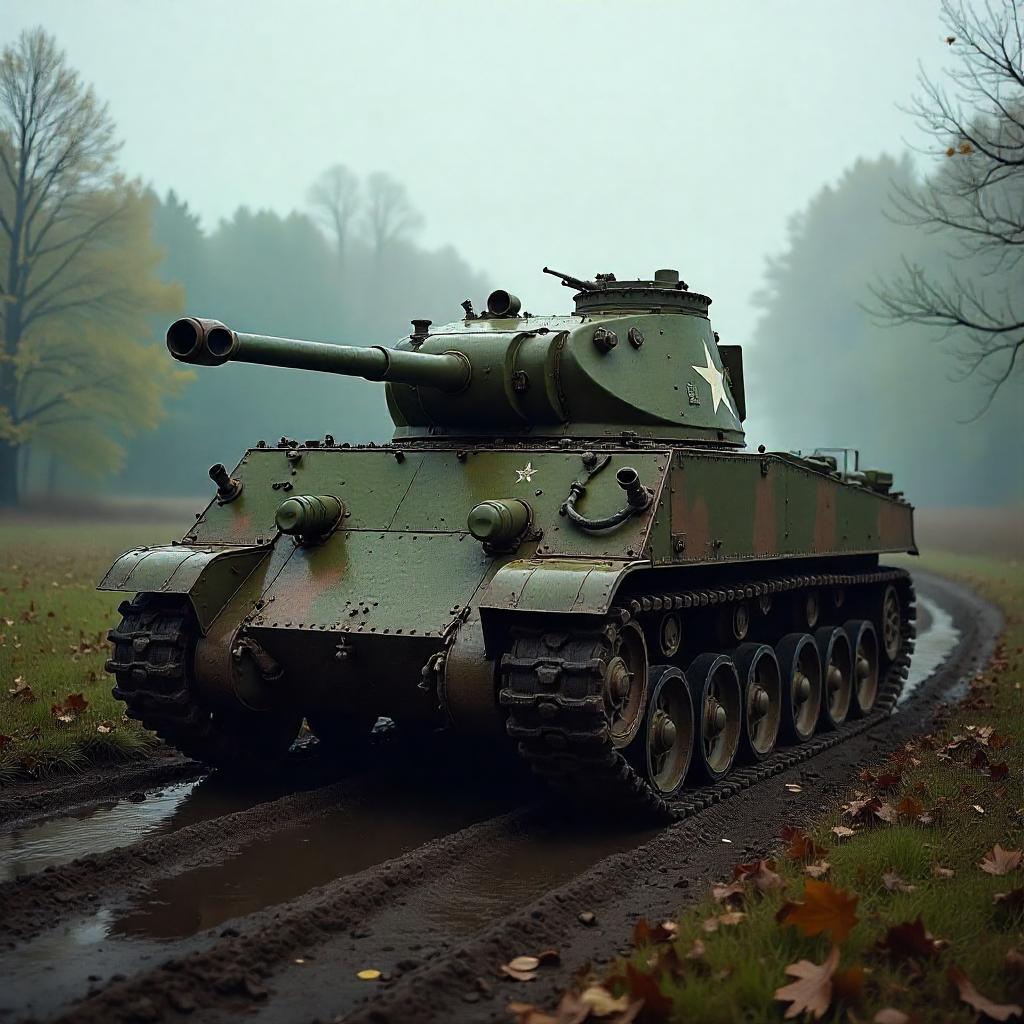
Military paint is the family of coatings that conceals defence vehicles, aircraft, ships, weapons and buildings and protects their surfaces. Unlike ordinary paint, it is specified by how it looks to sensors — the eye, night vision, thermal imagers and, for some coatings, radar — and by how it survives fuel, weather and wear. This guide explains what military paint is for, what a military paint specification asks for, which type of coating does which job, and where each is used.
TL;DR
- Military paint does two jobs: concealment and surface protection.
- It is specified by what sensors see — colour, near-infrared, heat and, for some coatings, radar — not only by its look.
- There is no single paint for every threat: camouflage, infrared-reflective, anti-thermal, radar-absorbing and identification coatings are layered.
- A specification should name each requirement, how it is measured and the result after weathering.
- Vehicles, aircraft, ships, weapons, shelters and field gear each weigh these requirements differently.
What military paint is for
Military paint has two jobs. The first is concealment: a vehicle, a gun or a shelter should blend into the ground around it, by day and at night, and give an observer as little as possible to pick out. The second is protection: the coating keeps metal from corroding, survives fuel, oil and cleaning fluids, and stands up to sun, rain, sand and abrasion for as long as the asset is in service.
What makes it military rather than industrial is the first job. Modern observers do not rely on the eye alone. Night-vision devices see near-infrared light, thermal imagers see heat, and radar sees shape and reflectivity. A paint that looks right in daylight can still stand out on every one of those sensors, so a military coating is chosen for how it behaves across the bands, not just for its colour. Our explainer on the spectrum from ultraviolet to thermal infrared shows what each band picks up.
Types of military paint and what each does
- Camouflage paint — the base colours and disruptive patterns matched to a terrain palette, with a matte finish so the surface does not shine. See our camouflage paint range.
- Infrared-reflective (IRR) paint — controls how each colour reflects near-infrared light, so the surface matches its background under night vision. See CAM-IRR® NIR-reflective paint.
- Anti-thermal paint — manages how a surface gives off heat, for engine decks, exhausts and other warm areas that show up on a thermal imager. See anti-thermal paint.
- Radar-absorbing paint — a radar-absorbing material applied as a coating, to weaken the radar return from a surface. See anti-radar (RAM) paint.
- Identification marking paint — markings that friendly forces can recognise through their own sensors. See friend-or-foe paint and our guide to combat identification.
- Protective primers and topcoats — the corrosion and chemical protection underneath, which every other layer depends on.
What a military paint specification asks for
A military paint is usually bought against a written specification. These are the properties it should cover:
- Colour against a terrain palette — named colours for forest, desert, snow, urban or naval use, often as a two- or three-colour pattern.
- A matte, low-sheen finish, because shine gives an object away long before its colour does.
- Infrared reflectance for every colour, with the standard it is measured against. A colour with no infrared requirement is an ordinary paint, however right it looks by day.
- Thermal or radar behaviour where those coatings are called for, and whether that is one coat or a layered system.
- Resistance to fuels, oils, cleaning and decontamination fluids.
- Corrosion protection with a compatible primer system for the substrate.
- Durability after weathering — sun, rain, sand and washing can shift infrared reflectance while the colour still looks right.
- Application and repair — surface preparation, method, cure and how a damaged area is touched up without leaving a patch that shows under night vision.
Each requirement should name how it is measured and by which accredited laboratory. Our camouflage paint page sets out how to read a camouflage paint specification question by question, and our explainer on the US camouflage-coating standard shows how one widely cited specification is built.
Is there one paint for every threat?
Coatings are sometimes sold as “multipurpose tactical paint”. In practice each sensor asks something different of a surface — colour for the eye, infrared reflectance for night vision, managed heat behaviour for a thermal imager, absorption for radar — and one coat rarely answers all of them well. Defence platforms therefore layer coatings: camouflage base colours with infrared-reflective properties, anti-thermal treatment over heat sources, radar-absorbing coating where the platform calls for it, and identification marking where friendly forces need it. The useful question about any “multipurpose” paint is which bands it has actually been tested for.
Where military paint is used
- Armoured and soft-skinned vehicles — camouflage and infrared-reflective colours on the hull, anti-thermal treatment on engine decks and exhausts.
- Aircraft and drones — low-sheen, weather-resistant coatings that cope with fast temperature changes, and radar-absorbing coatings on some platforms.
- Ships and coastal installations — greys for the sea and sky, with salt-water and corrosion protection underneath.
- Weapons and equipment — guns, launchers, generators and shelters that have to resist fuels, oils and heavy handling.
- Buildings, bunkers and fixed sites — coatings that weatherproof structures and blend them into the ground, often alongside camouflage nets.
- Field gear — helmets, cases and other kit that has to match the rest of the unit.
Each use weighs the requirements differently. A vehicle values infrared reflectance and repairability in the field; an aircraft values weight and weathering; a ship values corrosion protection; a fixed site values durability over years in one place.
Military paint and commercial paint
Commercial paint is chosen for how it looks and how well it protects against weather and corrosion. Military paint has to do all of that, and then behave correctly outside the visible band and prove it with laboratory evidence for each requirement. That is why two paints in the same colour can be very different products, and why a military paint quotation should be compared line by line against one specification.
CAMPRO® coatings are manufactured in India by Motley Exim Co., with NABL-accredited lab test reports available on request; defence exports are subject to India’s SCOMET export-control framework. For a quotation, send the platform or surface, the area or quantity, the terrain palette and colours, the bands you need covered, and the destination and end user.
Frequently Asked Questions
What is military paint?
Military paint is the family of coatings used on defence vehicles, aircraft, ships, weapons, equipment and buildings to conceal them and to protect their surfaces. What sets it apart from ordinary paint is that it is specified by how it looks to sensors — the eye, night vision, thermal imagers and, for some coatings, radar — and by how it survives fuel, weather, cleaning and abrasion.
What does a military paint specification include?
Usually the colours against a named terrain palette, a matte low-sheen finish, infrared reflectance for every colour, thermal or radar behaviour where those coatings are called for, resistance to fuels, oils and cleaning fluids, corrosion protection with a compatible primer, durability after weathering, and how the coating is applied and repaired. Each requirement should name how it is measured and by which laboratory.
Is there a multipurpose tactical paint?
The term is used for one paint offered against several threats, but each sensor asks something different of a coating: colour for the eye, controlled infrared reflectance for night vision, managed heat behaviour for thermal imagers and absorption for radar. Defence platforms therefore usually layer coatings — camouflage base colours, infrared-reflective topcoats, anti-thermal treatment over heat sources and identification marking where needed. Ask which bands a ‘multipurpose’ paint has actually been tested for.
What is the difference between military paint and commercial paint?
Commercial paint is chosen for its look and its protection against weather and corrosion. Military paint has to do that too, but it is also chosen for how it behaves outside the visible band — a colour can look right by day and stand out under night vision — and it is usually bought against a written specification with laboratory evidence for each requirement.
What colours does military paint come in?
Colours are set by the terrain the asset works in: greens for woodland and jungle, tans and browns for desert and dry ground, greys and whites for snow, built-up areas and naval use, often in two- or three-colour disruptive patterns. Custom palettes are set per programme, and every colour should carry its own infrared reflectance requirement.
Can military paint be used on civilian equipment?
Some defence-grade coatings share technology with aviation, marine and industrial coatings, but camouflage, infrared-reflective, anti-thermal and radar-absorbing paints are developed and supplied against defence requirements, and their export is controlled. Our CAMPRO® coatings are supplied to defence users against a written requirement.
Procurement or technical question?
CAMPRO® camouflage, CAM-IRR® paint, fire-suppression systems, and export-compliance support. Our team replies within 48 hours.
Contact Our Team →Sensor threat — what the coating answers
Detection systems this coating addresses
Camouflage coatings answer near-infrared and thermal sensors — image-intensified night vision, imaging-IR seekers such as AIM-9X and Javelin, and infrared search-and-track such as OLS-35 and PIRATE — while radar-attenuating finishes address AESA radars such as the AN/APG-81. CAMPRO CAM-IRR and anti-radar coatings are engineered to manage reflectance and emissivity against this class of sensor. This guide is educational and states no product performance figures.