
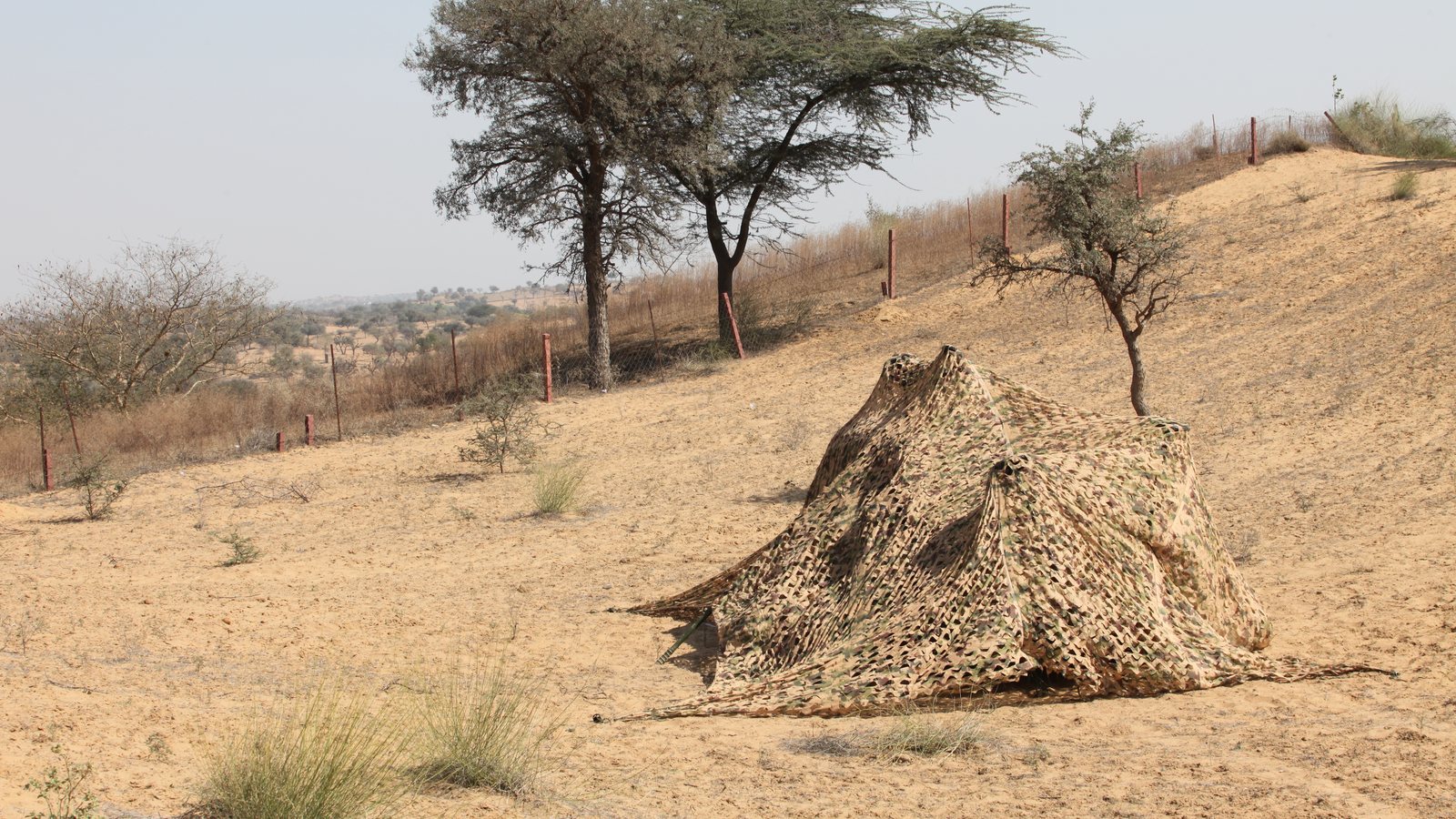
A multi-spectral camouflage net is an engineered system, and like any engineered system its service life is decided as much by how it is treated as by how it was built. The part most users miss: a degraded net usually fails invisibly first — its near-infrared and thermal behaviour drifts out of specification long before it looks worn to the eye. This guide covers the care, storage, inspection and repair practices that preserve a net’s signature, and the criteria for deciding when a net is due for retirement.
TL;DR
- A camouflage net’s service life depends on material specification, environment and care — there is no universal year figure, and suppliers should be asked for performance after ageing, not a number alone.
- Degradation is invisible first: coatings that control near-infrared reflectance and emissivity drift out of specification before the net looks worn.
- Cleaning is gentle by design — brush, plain-water rinse, full shade drying. Detergents, solvents and pressure washing strip the engineered coatings.
- Storage is where service life is won or lost: dry, ventilated, off the ground, out of sunlight, and never packed wet.
- Repair with the manufacturer’s matched material only — an off-spec patch reads as an anomaly under night vision and thermal imagers.
Maintenance is a signature problem, not housekeeping
With ordinary equipment, wear shows. With a multi-spectral net, the most important wear does not: the engineered behaviour that makes the net work — controlled colour, near-infrared reflectance and surface emissivity — lives in coatings and materials that degrade chemically under sunlight, abrasion and moisture. A net can look perfectly serviceable in daylight while its near-infrared response has drifted far enough that it glows under an image intensifier, or its emissivity no longer reads as background to a thermal imager. That is why care and maintenance belong in the same conversation as choosing a camouflage net in the first place: neglect quietly converts a signature-management system back into a coloured screen.
Cleaning and drying: gentle by design
Most of what a net picks up in the field — dust, sand, plant debris — comes off with a shake and a soft brush. Where washing is needed, plain water is the tool; stubborn soiling justifies at most a mild soap recommended by the manufacturer. What the cleaning regime must avoid is anything aggressive: harsh detergents, solvents and pressure washing strip or thin the very coatings that control the net’s visible tone, near-infrared reflectance and emissivity. A net ‘cleaned’ with a pressure washer can come out brighter to the eye and measurably worse across every other band.
Drying matters as much as washing. Dry the net fully, spread or loosely hung, in shade — not baking in direct sun, which adds a dose of exactly the ultraviolet exposure the maintenance regime is trying to limit. And never pack a net away damp.
Storage: where service life is actually won or lost
Field time gets the attention, but for most nets the majority of life is spent in storage — and storage is where the quiet damage happens. The rules are simple. Store dry, in a ventilated space, off the ground, away from direct sunlight and away from fuels, solvents and exhaust. A net packed wet grows mould, rots stitching and delaminates coatings; a net stored against a sun-facing wall keeps ageing as if it were deployed. Avoid long-term tight compression where the manufacturer advises against it, and keep nets in their bags or on racks rather than loose on concrete floors that hold moisture. None of this costs money — which is precisely why it is the highest-return maintenance there is.
Inspection: what to check, and how often
Two rhythms cover it: inspect after every deployment and recovery, and on a fixed calendar interval while in storage. The checklist is short:
- Structure. Seams, edges and attachment points; tears and abrasion patches; hardware and lines.
- Garnish. Loss or flattening of the three-dimensional garnish that breaks up shape and decouples heat — a flattened net loses both.
- Surface. Colour fade, and especially any change in sheen. A surface turning glossier or duller than it was delivered is often the visible symptom of coating degradation that is also shifting the near-infrared and thermal behaviour.
- Contamination. Oil, fuel and solvent staining — these alter surface behaviour locally and create anomalies a sensor can pick out.
Damage found early is a patch; damage found late is a replacement. The economics favour the checklist. The same discipline applies with extra force in punishing environments — the ultraviolet, sand abrasion and temperature swings described in our desert and arid-environment guide compress the same ageing into less time.
Repair: matched material or not at all
Small tears, burns and localised garnish loss are normal service events, and a defence-grade net is designed to be repaired — with the manufacturer’s repair material. That detail is not commercial fussiness: the repair patch has to match the net’s colour, near-infrared reflectance and thermal behaviour, or the repair itself becomes the anomaly. An ordinary green fabric patch that looks acceptable in daylight can read as a bright square under night vision — a marker sewn exactly where the damage was. For the same reason, field-expedient repairs with tape or off-spec fabric should be treated as strictly temporary. Larger structural damage — long tears, failed seams, brittle sections — is a workshop or section-replacement job, and a point to weigh repair cost against remaining service life.
Service life and retirement: specify it, then test against it
‘How long does a camouflage net last?’ has no honest single answer, because the variables — material system, environment, duty cycle, care — differ too much between users. What a serious specification does instead is define performance after ageing: the net must still meet its visible, near-infrared and thermal requirements after defined ultraviolet, abrasion and weather exposure. That framing, covered in our guide to specifying a multispectral camouflage net, is also the correct basis for retirement: a net is due for replacement when its signature no longer meets the specification — not merely when it looks tired.
Structural end-of-life is easy to see. Signature end-of-life is not, which is why high-stakes users periodically re-test nets against the original specification at an accredited laboratory rather than judging by eye. Material choice sets the ceiling on all of this — our companion piece on camouflage net materials and durability covers how the fabric and coating system determine what ageing performance is achievable in the first place. Care and maintenance decide how much of that ceiling a net actually reaches.
Frequently Asked Questions
How long does a camouflage net last?
There is no single number: service life depends on the material specification, the environment (UV load, abrasion, moisture, temperature swing) and how the net is cleaned, dried and stored. A defence-grade net is specified to hold its signature and strength after ageing — so the right question for a supplier is what performance is retained after UV, abrasion and weather testing, not a year figure alone.
How should a camouflage net be cleaned?
Shake or brush off dust and debris, rinse with plain water if needed, and dry fully in shade before storage. Avoid harsh detergents, solvents and pressure washing — they can strip the engineered coatings that control colour, near-infrared reflectance and emissivity, degrading the net’s signature even when it still looks fine to the eye.
Can a camouflage net be stored wet?
No. Storing a net wet or damp invites mould, rot in stitching and coating damage, and shortens service life sharply. Dry the net fully in shade, then store it in a dry, ventilated space, off the ground and out of direct sunlight.
Can you repair a torn camouflage net in the field?
Small tears and localised garnish loss can usually be repaired with the manufacturer’s repair material, which matches the net’s colour, near-infrared and thermal behaviour. Avoid patching with off-specification material — an ordinary fabric patch reads differently under night vision or a thermal imager and creates an anomaly exactly where the net was damaged.
How often should a camouflage net be inspected?
After every deployment and recovery, and on a fixed calendar interval while in storage. Check seams and edges, attachment points and hardware, garnish loss, abrasion patches, and any change in colour or surface sheen — a sheen or fade change can indicate coating degradation that also affects the near-infrared and thermal bands.
When should a camouflage net be retired and replaced?
When its signature no longer meets the specification — not merely when it looks worn. Structural criteria (tears, seam failure, brittle material) are obvious; signature degradation in the near-infrared or thermal band is invisible to the eye, which is why high-stakes users periodically re-test nets against the original specification at an accredited laboratory.
Procurement or technical question?
CAMPRO® camouflage, CAM-IRR® paint, fire-suppression systems, and export-compliance support. Our team replies within 48 hours.
Contact Our Team →